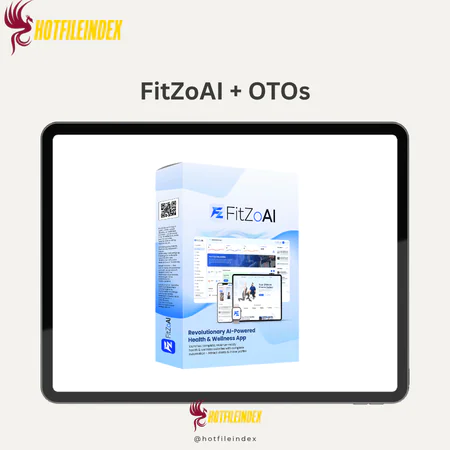
FitZoAI + OTOs
$37.00
FitZoAI is an AI-powered fitness coaching platform that creates and adapts personalized workout plans based on your goals, progress, and training feedback.
You will get Individual Account of
- FE + OTOs
Most people who want to exercise consistently already know they should be doing it. The barrier is almost never motivation in the abstract. The barrier is the specific, practical question that appears every time they consider starting: what exactly should I do, how much of it, in what order, and how do I know when to make it harder? Without clear answers to those questions, the average person either follows a random YouTube workout with no progression structure, copies a training plan designed for someone with completely different goals and equipment, or simply avoids the whole process because the decision-making overhead feels too high before the first set is even done.
FitZoAI is an AI-powered fitness planning and coaching platform built specifically to eliminate that decision-making barrier. It takes your goals, your available equipment, your realistic schedule, and your fitness level as inputs and generates a structured, progressive training plan calibrated to your specific situation rather than to a generic average person. More importantly, it adapts that plan over time based on how you respond to training rather than delivering the same program indefinitely regardless of whether you are progressing, stagnating, or finding the sessions unsustainable. For beginners and busy professionals who want a fitness system that works around their actual life, this review examines what FitZoAI delivers in 2026.
What Is FitZoAI?
FitZoAI is an AI-powered fitness planning and coaching platform that generates personalized workout programs based on your fitness profile, goals, and constraints, and progressively adapts those programs based on your performance and feedback to keep you progressing rather than plateauing. It is built by a team with over a decade of experience in software and technology, and it targets the most common reasons people fail to maintain fitness routines: not knowing what to do, not knowing how to progress, and losing momentum when motivation naturally dips.
The core distinction between FitZoAI and a static workout app or a generic training PDF is the adaptive intelligence layer. A static program delivers the same workouts regardless of how you respond. FitZoAI adjusts based on the feedback you provide after each session, increasing intensity when you are adapting well and reducing volume when you are showing signs of needing recovery. The result is a plan that evolves with your actual fitness development rather than becoming progressively less appropriate as you change.
The platform also includes basic nutrition guidance as a complement to training, providing calorie and macronutrient targets calculated from your profile alongside meal suggestions that support your goals. This nutritional component is educational and supportive rather than clinical, and it is not a substitute for medical nutrition advice. For the majority of beginners and busy professionals whose primary need is understanding roughly how to eat in support of their training rather than precise clinical dietary management, the nutrition layer provides genuinely useful orientation without overwhelming complexity.
FitZoAI is accessible as both a mobile app and a web platform, which means it works across the devices and environments that busy professionals actually use throughout their day rather than requiring a specific device or context to access.
How FitZoAI Works: A Step-by-Step Walkthrough
Step 1: Account Creation
Creating a FitZoAI account takes under a minute through standard email registration or social login. The platform is accessible immediately after registration without a lengthy onboarding delay.
Step 2: Profile Setup with Physical Details
Your age, height, current weight, and gender are entered to provide the baseline data for the AI's initial recommendations. These inputs calibrate training volume suggestions and calorie estimates to your specific body rather than to population averages.
Step 3: Goal Selection
You choose your primary fitness objective from the available options: fat loss, muscle building, strength improvement, endurance development, or general health maintenance. This goal selection shapes the training methodology the AI applies, with fat loss goals generating circuit and metabolic conditioning approaches while muscle building goals generate higher-volume resistance training programs.
Step 4: Constraint and Preference Specification
This is the step that most meaningfully differentiates FitZoAI from generic programs. You specify exactly what equipment you have access to, how many days per week you can realistically train, how long each session can actually be, and any physical limitations or injuries to account for. The quality of the personalization that follows depends on the honesty of the inputs here. Aspirational answers produce plans that look impressive but are structurally difficult to follow. Conservative, accurate answers produce plans that match your actual life and are therefore genuinely sustainable.
Step 5: Training Environment Selection
Home, commercial gym, or hybrid training settings are specified to determine the exercise pool the AI draws from when building your program.
Step 6: Plan Generation and Daily Use
FitZoAI generates your initial plan based on the profile inputs. Daily use involves completing your scheduled sessions, logging your sets, reps, and weights, and rating session difficulty after each workout. The AI uses this ongoing feedback to adjust your subsequent sessions, progressing the plan when you are adapting well and backing off when signals indicate you need recovery.
Key Features of FitZoAI

Personalized Workout Programming Engine
The workout programming engine is the platform's core feature and the one that most directly delivers the value proposition of having a fitness plan calibrated to your specific situation rather than to a generic user profile. The engine generates structured training plans organized around your stated goal, available equipment, and time constraints, with progressive overload built into the plan architecture from the beginning rather than requiring you to understand how to increase difficulty yourself.
The program types cover the primary fitness objectives that beginners and busy professionals typically pursue. Fat loss goals generate circuit-based and metabolic conditioning programs that maintain elevated heart rate and maximize calorie expenditure within the session time available. Muscle building goals generate higher-volume resistance training organized around compound and isolation movements appropriate to the available equipment. Strength goals generate lower-rep, higher-load programming with emphasis on progressive loading of compound movements. General fitness goals generate balanced hybrid programs that develop multiple physical qualities simultaneously rather than optimizing for any single one.
For a busy professional with thirty-five to forty minutes available three days per week and only adjustable dumbbells at home, FitZoAI generates a structured dumbbell program with the specific exercises, sets, reps, and rest periods appropriate to that equipment and time constraint, with a progression schedule that systematically increases demand over weeks as the body adapts. This contrasts with generic programs that are designed for users with full gym access and unlimited training time, which means they either cannot be followed with limited equipment or must be so heavily modified that the original programming logic is lost.
Adaptive AI Coaching and Session Feedback Integration
The adaptive coaching layer is where FitZoAI moves beyond being a static plan generator into a genuinely responsive training system. After each completed workout, you rate the session's difficulty on a simple scale and optionally provide notes on how you felt. The AI uses this feedback to adjust subsequent sessions: consistently easy sessions trigger intensity increases, consistently difficult sessions prompt volume reductions, and sessions reporting pain prompt the system to suggest alternative movements and recommend professional evaluation.
The behavioral dimension of the coaching layer is what most directly supports the consistency that beginners and busy professionals struggle to maintain. Streak tracking creates a visible accountability metric that makes missing a session feel more concrete than it would feel without any record of the pattern. Pre-session reminders reduce the gap between planning to exercise and actually starting. Milestone acknowledgments when you complete consecutive training weeks, reach a personal record on a lift, or maintain your schedule through a particularly demanding week provide the positive reinforcement that keeps motivation from completely relying on willpower alone.
The deload recommendation system is a feature that most beginners overlook until they experience training fatigue firsthand. A deload is a planned period of reduced training volume that allows accumulated fatigue to dissipate and the body to express the fitness adaptations that intense training has been driving. Without planned deloads, most people either push through accumulating fatigue until they get injured or sick, or they unconsciously reduce training quality and frequency without understanding why. FitZoAI schedules automatic deload suggestions based on accumulated training metrics, which means the system manages this important programming variable without requiring the user to understand the physiological rationale for it.
Exercise Library with Video Demonstrations and Form Guidance
The exercise library provides the instructional foundation that allows beginners to follow their generated program safely and effectively without needing to research each exercise independently. Each exercise entry in the library includes video demonstrations or animations showing correct movement patterns, written form cues identifying the most important technique points, primary muscle group information, and alternative exercise options for situations where the primary exercise is unavailable or inappropriate.
For beginners, the form guidance dimension of the exercise library is as important as the programming logic the AI applies to selecting and sequencing exercises. Poor technique in resistance training is the primary source of preventable injuries for new exercisers, and it also reduces the effectiveness of each exercise by distributing load away from the target muscles. Having clear visual demonstrations and specific technique cues for every exercise in the program means beginners can learn correct movement patterns from the beginning rather than developing technique habits that become progressively harder to correct as they become more entrenched.
The exercise substitution system is practically valuable for busy professionals whose training environment changes. A traveler who normally trains at a commercial gym but spends two weeks in a hotel can substitute gym-based exercises for hotel-room alternatives that target the same muscle groups, keeping their program continuous rather than experiencing a complete break that resets their training consistency metrics and momentum.
Basic Nutrition Guidance and Macro Tracking
The nutrition guidance component provides the foundational dietary orientation that most beginners need to support their training without the complexity of clinical nutrition planning. Daily calorie and macronutrient targets calculated from your profile data and goals give you clear numerical anchors for eating decisions, and the meal suggestions aligned with those targets provide practical examples of how those numbers translate to actual food choices.
It is important to understand what this nutrition component is and what it is not. The calorie calculations are estimates derived from standard population-level formulas and will require individual adjustment based on your actual results over four to six weeks. They are starting points rather than precise prescriptions. The meal suggestions are practical illustrations rather than rigid meal plans. And the entire nutrition layer is supportive and educational rather than clinical, which means it is appropriate for generally healthy individuals looking to eat better in support of their fitness goals but is not appropriate as the primary nutrition management tool for people with medical conditions affecting diet, clinical eating disorders, or other situations requiring registered dietitian oversight.
For the majority of FitZoAI's target audience, beginners and busy professionals with no diagnosed nutritional health conditions, this level of nutrition support provides genuinely useful guidance that bridges the gap between understanding that diet matters and knowing roughly what to do about it, without overwhelming them with the clinical precision that is unnecessary for their situation.
Progress Tracking and Analytics
The progress tracking system records each completed workout with logged sets, reps, and weights, tracks body weight entries and physical measurements, monitors weekly training adherence, and visualizes strength progression on key exercises over time. These records serve two distinct purposes: motivation through visible evidence of progress, and optimization through data that reveals what is and is not working.
The motivational dimension of progress tracking is consistently underestimated by people who have not experienced its effect. Seeing a graph of your squat working weight increasing from one month to the next provides concrete evidence that the training is producing results in a domain where results are often slow to feel subjectively different. The visible record of consistent training over weeks and months creates a sense of investment in the streak that makes breaking it feel more costly than starting would feel before the streak existed.
The optimization dimension becomes valuable after several weeks of data have accumulated. When FitZoAI's analytics surface the observation that you consistently complete certain workout types but frequently skip others, or that your adherence is significantly higher on shorter sessions than longer ones, these insights allow you to adjust your program configuration to better fit your actual behavior rather than your aspirational behavior.
Pricing Plans and OTOs detailed
FE – FitZoAI ($37 one-time)
- One-time payment during launch period
- AI-powered fitness and wellness business platform
- Create AI fitness and wellness websites
- Built for gyms, trainers, wellness brands, and agencies
- Commercial rights included
- Cloud-based platform access
- 30-day money-back guarantee
- Launch pricing expected to increase later
- Planned future monthly subscription model
OTO 1 – FitZoAI PRO ELITE ($47 one-time)
- Expanded niche access
- Increased website capacity
- Advanced client management tools
- Event management features
- Subscription functionality
- Email integrations included
- Push notification system
- Vlog publishing tools
- Enhanced analytics and tracking
- Supports up to 10 fitness niches
- Supports up to 15 AI fitness websites
- Designed for agencies and larger client operations
OTO 2 – AI Automation Suite ($47 one-time)
- Marketing automation system
- Lead follow-up automation
- Chatbot communication tools
- WhatsApp, SMS, and email automation
- Broadcast messaging features
- Campaign tracking dashboard
- DFY ad templates included
- Live session and event tools
- Built for client acquisition and lead nurturing
- Supports recurring agency management services
OTO 3 – Unlimited With Agency ($127 one-time)
- Removes platform usage limits
- Unlimited websites and client projects
- Unlimited content and video creation
- Unlimited product creation
- Access across all 10 fitness niches
- Agency license included
- Sell FitZoAI-powered services to clients
- Keep 100% of service profits
- Built for scalable fitness agency businesses
OTO 4 – Reseller Rights ($197 one-time)
- Reseller license included
- Sell FitZoAI and keep 100% of profits
- Promote the software without building your own platform
- Access reseller links and sales system
- Earn from front-end and upgrade sales
- Hosting, updates, and support handled by vendor
- Suitable for affiliates, marketers, agencies, and freelancers
Advantages of FitZoAI
- Adaptive programming that evolves with your development prevents the plateau that comes from following the same static program indefinitely, which is the most common reason that beginners who start strong stop seeing results after the first few weeks.
- Constraint-based personalization that genuinely accounts for your equipment and schedule produces programs that are actually followable in your real life rather than theoretically optimal programs that require equipment or time you do not have.
- Beginner-accessible onboarding with clear exercise guidance removes the knowledge barrier that prevents many people from starting a structured fitness program, providing both the plan and the instructional support to execute it correctly.
- Motivational infrastructure including streak tracking and milestone recognition addresses the consistency dimension of fitness maintenance rather than only the programming dimension, supporting the behavior change that sustained results require.
- Meaningful cost advantage over personal training makes structured, adaptive programming accessible to people who need programming guidance but cannot justify the per-session cost of regular personal training.
Disadvantages of FitZoAI
- Advanced athletes will outgrow the programming depth relatively quickly, as FitZoAI is designed for beginners and intermediates rather than for competitive athletes with specialized periodization requirements.
- The adaptive AI requires honest, consistent feedback to function as designed. Users who stop logging sessions, rate every workout identically to avoid changes, or fail to update their profile when circumstances change will receive progressively less relevant recommendations.
- Calorie estimates are approximations that require individual adjustment based on real-world results and are not appropriate as precise targets for people with medical conditions affecting metabolism or dietary requirements.
- Real-time technique correction is not possible. FitZoAI can show you how an exercise should look and provide written form cues, but it cannot observe your actual movement and correct errors in real time the way a physical personal trainer can.
Who Is FitZoAI For?
- Complete beginners to structured exercise who want a specific, progressive plan to follow rather than having to research and assemble their own training program from scratch.
- Busy professionals with limited and variable training time whose schedules require a flexible, constraint-aware program that works around their actual availability rather than demanding a fixed time commitment regardless of life circumstances.
- Home workout enthusiasts who train without gym access and need programs designed specifically for their available equipment rather than gym-based programs they have to awkwardly modify.
- Budget-conscious fitness seekers who want the structured, progressive programming that personal training provides but cannot justify the per-session cost of regular in-person training.
Who Is FitZoAI Not For?
- Competitive and advanced athletes with specific periodization requirements, peaking protocols, and performance targets that go beyond what a general AI fitness platform is designed to address.
- People with medical conditions affecting exercise capacity who need clinical exercise prescription from a physiotherapist, exercise physiologist, or sports medicine professional rather than AI-generated fitness programming.
- Users who want instructor-led video classes with the energy and motivation of a guided class format rather than a self-directed plan to follow independently.
FitZoAI vs. The Alternatives
| Criteria | FitZoAI | Fitbod | Freeletics | Nike Training Club | Personal Trainer |
| AI-Adaptive Personalization | Yes | Yes | Moderate | Low | Human-adaptive |
| Home Workout Support | Strong | Moderate | Strong | Strong | Varies |
| Nutrition Guidance | Basic | None | Basic | None | Varies |
| Beginner Accessibility | High | Moderate | Moderate | High | High |
| Progressive Programming | Yes | Yes | Yes | Limited | Yes |
| Real-Time Form Correction | No | No | No | No | Yes |
| Cost | Low subscription | Low subscription | Moderate subscription | Free with premium | High per-session |
| Best For | Beginners and busy professionals | Gym-focused strength | Bodyweight HIIT | Casual variety seekers | Hands-on instruction |
FitZoAI's strongest comparative position is the combination of AI-adaptive programming for both home and gym contexts alongside basic nutrition guidance in one platform, serving users who want a more complete lifestyle support tool rather than workout programming alone. Fitbod provides more specialized gym-based strength programming but lacks nutrition support and is less suited to home workout contexts. Freeletics excels for bodyweight high-intensity training but is less appropriate for users wanting traditional resistance training with equipment. Nike Training Club offers broad video-led content with excellent accessibility but limited personalized progression. Personal training provides hands-on instruction and real-time correction that no app replicates but at a cost that makes consistent access impractical for most people.
Frequently Asked Questions About FitZoAI
- What exactly is FitZoAI and who is it designed for?
FitZoAI is an AI-powered fitness planning and coaching platform that generates personalized workout programs based on your goals, equipment, and schedule, and adapts those programs over time based on your performance and feedback. It is designed primarily for beginners and intermediate exercisers who want structured, progressive fitness programming without hiring a personal trainer, and for busy professionals who need flexible programs that work around their actual schedules and available equipment.
- Do I need gym access or special equipment to use FitZoAI?
No. FitZoAI generates programs appropriate to whatever equipment you have access to, including bodyweight-only programs for users with no equipment, dumbbell programs for home gym users, and full gym programs for users with commercial gym access. The platform is specifically designed to work across training environments rather than assuming gym access, which makes it well-suited to home workout contexts.
- How quickly can I expect to see results with FitZoAI?
This depends on multiple individual factors including your starting fitness level, training consistency, diet, sleep quality, and genetic factors that vary between people. FitZoAI provides the structured programming and progressive overload that support physical adaptation, but results depend on consistent execution of the program over weeks and months rather than days. Most people who follow a structured, progressive program consistently report noticeable changes in strength and body composition within four to eight weeks, though individual timelines vary significantly. FitZoAI is a fitness guidance tool and makes no specific health or physical transformation claims.
- Can FitZoAI replace a personal trainer?
Partially, for users whose primary need is structured programming rather than hands-on instruction. FitZoAI handles program design, progressive planning, scheduling, and motivational support effectively. It does not provide real-time technique correction, in-person accountability, or the relationship-based coaching that human trainers provide. For users who need significant form coaching or who benefit substantially from the human relationship dimension of personal training, FitZoAI complements but does not replace that service.
- Is FitZoAI suitable for people who are completely new to exercise?
Yes. Beginners are among FitZoAI's best-fit users. The platform removes the decision-making burden about what exercises to do, how many sets and reps to perform, and how to progress, which addresses the knowledge barriers that prevent many beginners from starting. The exercise library's video demonstrations help beginners learn correct movement patterns from the beginning. The recommendation for new exercisers is to start with conservative frequency inputs, two to three days per week rather than the maximum the platform supports, to build the habit before adding volume.
- How does FitZoAI adapt my plan if my schedule changes?
You can update your profile settings at any time, including available training days and session length, and FitZoAI will adjust your program to fit the new parameters. The platform is designed to accommodate the schedule variability that busy professionals regularly experience rather than requiring a fixed commitment that cannot be modified when circumstances change.
- What nutrition information does FitZoAI provide?
FitZoAI provides daily calorie targets, macronutrient targets covering protein, carbohydrate, and fat distribution, general dietary guidance, and meal suggestions aligned with your targets and dietary preferences. This nutrition support is educational and supportive rather than clinical, and it is not designed to replace registered dietitian consultation for people with medical conditions affecting diet or other clinical nutrition needs. Calorie estimates are population-level approximations that require individual adjustment based on your real-world results.
- Is FitZoAI safe for people with existing injuries or physical limitations?
FitZoAI allows you to specify physical limitations during setup and will avoid movements that conflict with noted restrictions. However, FitZoAI is not a medical or clinical service and cannot provide injury rehabilitation programming, clinical exercise prescription, or medical clearance for exercise. If you have a significant injury, medical condition affecting exercise capacity, or any doubt about whether specific exercises are safe for your situation, consult a qualified healthcare professional before beginning any new exercise program.
- How does the streak tracking and motivation system work?
FitZoAI tracks your consecutive completed training sessions and celebrates streaks with milestone acknowledgments. Pre-session reminders arrive before scheduled workout windows. Positive reinforcement messages acknowledge consistency achievements, personal records, and goal progress. These features are designed to support the behavioral consistency that produces long-term fitness results by making adherence visible and providing small motivational rewards for maintaining the habit.
- Does FitZoAI work without an internet connection?
Workout content that has been previously downloaded or loaded to your device is typically accessible offline, allowing you to follow sessions without a live connection. Features requiring server interaction, including AI plan updates, analytics syncing, and new content generation, require internet access. For current offline capability specifics, check the official FitZoAI app documentation.
- How is my personal and health data protected in FitZoAI?
FitZoAI applies standard data protection practices including encryption of data in transit and at rest. Because fitness data is sensitive personal information, reviewing FitZoAI's full Privacy Policy before creating an account is recommended to understand specifically what data is collected, how it is used, and what your rights are regarding that data under applicable privacy regulations.
- What is the most important thing to do when starting FitZoAI to get the best results?
The single most important thing is entering honest, conservative profile information rather than aspirational data. Telling the platform you can train five days per week when your actual schedule allows three will generate a plan you are likely to fail to follow, which undermines both results and motivation. Starting with the minimum frequency you are confident you can maintain, following the plan consistently for four to six weeks, and then increasing frequency or intensity based on actual experience produces significantly better outcomes than starting ambitiously and reducing your commitment when the plan proves unsustainable.
All Info just pre-build when listing. Until Product mark as "Instant Deliver", infomation will be updated again like OTOs you will be get,..etc
Related products

SAAS

SAAS