
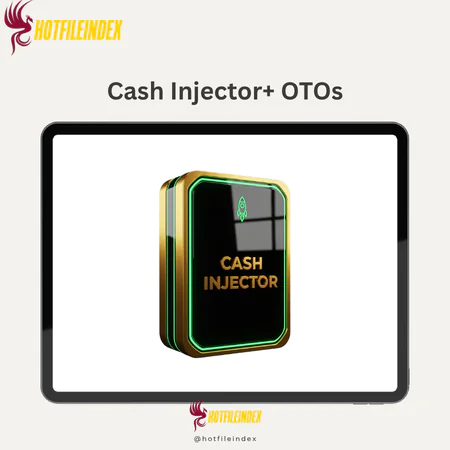
Cash Injector+ OTOs
$19.00
Cash Injector is a revenue-generation platform that helps businesses increase short-term sales using campaign software, promotional templates, email reactivation strategies, and marketing training.
You will get Individual Account of
- FE + OTOs
E-commerce brands, digital agencies, and established service businesses share a common revenue challenge that compounds quietly over years of normal business operation. Every transaction generates a customer record. Every marketing campaign generates a lead. Every content piece generates subscribers. Over three to five years of consistent business activity, the average established operator accumulates thousands of contacts, hundreds of past buyers, and a substantial database of people who have demonstrated interest in what the business offers through the simple act of engaging with it previously.
Most of that accumulated data is generating zero revenue at any given moment.
The typical business response to a revenue gap is to spend more on advertising to acquire new customers, which introduces a compounding problem: customer acquisition costs have risen consistently across every major paid advertising platform through 2026, and the economics of new customer acquisition frequently require several transactions before the initial acquisition cost is recouped through customer lifetime value. Businesses that reflexively respond to every revenue shortfall by increasing ad spend are funding growth through their least efficient revenue channel while their most efficient channel, their existing customer and lead database, sits idle.
Cash Injector is a revenue-acceleration platform built on the operational insight that most established businesses are leaving significant revenue on the table from customers they already have before they need to invest a dollar in acquiring customers they do not yet have. This review examines what Cash Injector delivers for e-commerce brands, agencies, and service businesses seeking structured campaign infrastructure for systematic existing audience monetization in 2026.
What Is Cash Injector?
Cash Injector is a cloud-based revenue-acceleration platform that provides campaign software, pre-engineered promotional templates, behavioral email sequences, average order value optimization tools, and strategic training frameworks specifically designed to generate revenue from existing customer databases and lead lists without requiring new advertising investment, external financing, or audience growth.
One search context worth establishing: searching for Cash Injector online in 2026 produces split results between this marketing software platform and financial articles about traditional business capital injection strategies. These are unrelated topics. Cash Injector the marketing platform generates revenue through sales campaigns to existing audiences; it has no connection to bank loans, equity financing, or debt instruments. This review covers the marketing platform specifically.
The platform's positioning is explicitly as an acceleration tool rather than a foundation builder. It is designed for businesses that have already done the hard work of building an audience and validating products, and who need the campaign infrastructure to extract the revenue potential from those existing assets systematically rather than allowing them to depreciate through inactivity.
How Cash Injector Works: A Step-by-Step Walkthrough
Step 1: Database Integration and Asset Mapping
An e-commerce operator begins by connecting their existing customer database, email platform, and payment infrastructure to the Cash Injector dashboard. The asset mapping step identifies the specific audience segments available for campaign targeting: first-time buyers who have not returned, high-value customers who have not purchased recently, warm leads who opted in but never converted, and active subscribers who represent the most responsive segment for immediate promotional outreach.
Step 2: Revenue Objective and Campaign Type Selection
With the audience asset map established, the operator selects the campaign type that matches the current revenue objective. A seasonal clearance revenue push uses a different template than a dormant customer reactivation sequence, which uses a different template than a VIP loyalty program launch. The campaign type selection aligns the template architecture with the specific conversion dynamic the business needs to execute.
Step 3: Offer Architecture and Template Population
The selected template is populated with the business's specific products, promotional pricing, incentive structures, and deadline parameters. For an e-commerce operator, this means entering the specific SKUs being promoted, the discount structure, any bundle configurations, and the promotional window dates. For a service agency, this means entering the specific service tier being offered, the engagement terms, and any early-bird incentives.
Step 4: Omnichannel Campaign Deployment
The configured campaign is deployed across email, social channels, and any other client-facing communication infrastructure the business maintains. The omnichannel deployment capability ensures that the promotional message reaches the existing audience through every channel they use to engage with the business rather than limiting reach to a single communication channel.
Step 5: Revenue Tracking and Active Optimization
The analytics dashboard provides real-time visibility into campaign performance: open rates, click-through rates, conversion rates, and revenue attributed to specific campaign elements. This real-time data allows active optimization during the campaign window rather than only post-campaign retrospective analysis.
Key Features of Cash Injector

Structured Campaign Blueprint Library for Business-Specific Revenue Scenarios
The campaign blueprint library is the Cash Injector feature that most directly addresses the strategic uncertainty that prevents most established businesses from running promotional campaigns as consistently as their revenue potential warrants. The uncertainty is not whether running a promotion is a good idea. Most business operators know intuitively that a well-executed promotion to their existing database would generate revenue. The uncertainty is structural: what exactly should the campaign look like, how should it be sequenced, what psychological mechanics should drive urgency, and how should the offer be positioned to maximize conversion without damaging the long-term customer relationship?
For e-commerce operators specifically, the blueprint library includes campaign structures designed for the specific conversion dynamics of repeat purchase promotion that differ meaningfully from lead conversion or subscription sales. Repeat purchase promotions succeed by making the known quantity of a past purchase feel relevant again in the context of the customer's current needs, and the e-commerce-oriented templates embed this relevance-restoration mechanism into every sequence stage rather than simply announcing that products are on sale.
For agency operators, the blueprint library provides both the campaign frameworks for running revenue promotions for agency clients and the operational templates for running their own business development promotions. An agency that needs to fill a cohort of new client engagements before a specific quarter can use the same VIP flash sale framework they would use for a client's promotional campaign, adapting the template to their own service offering rather than a client's product.
The categorization by business type and campaign objective that organizes the library reduces the decision overhead of campaign strategy selection. An e-commerce operator facing a seasonal slowdown can navigate directly to seasonal slowdown campaign frameworks rather than evaluating the full library for relevance. A service business wanting to re-engage past clients who have been inactive for six months can navigate to dormant client reactivation frameworks specifically. This organized navigation reduces the time between deciding to run a campaign and having a concrete campaign structure to build from.
Behavioral Email Automation with Conversion-Stage Responsiveness
The behavioral email automation system is the platform feature that most significantly differentiates a Cash Injector promotional campaign from a standard email broadcast to the business's full list. The fundamental limitation of list-wide promotional broadcasts is their treatment of all subscribers as identical regardless of how differently they are engaging with the campaign in real time.
A subscriber who opened the first email, clicked the offer link, and spent time on the product page but did not complete a purchase is at a completely different conversion stage than a subscriber who has not opened any email in the sequence. Sending both subscribers the same next email treats meaningfully different conversion readiness as if it were the same state, which produces suboptimal results for both segments.
For e-commerce brands managing large customer databases with diverse engagement histories, the behavioral segmentation that automated triggers provide is operationally essential rather than simply preferable. Manually segmenting a database of ten thousand customers by engagement level and routing each segment through appropriate follow-up sequences is not practically achievable without automation. Cash Injector's behavioral automation makes this level of conversion-stage responsiveness operationally achievable for businesses without dedicated marketing operations teams.
The conversion impact of behavioral sequencing over broadcast sequencing is directly traceable to the basic economics of conversion psychology. A message that arrives at the right moment in a prospect's decision process with content specifically relevant to their current hesitation point is inherently more persuasive than a message that arrives at the same scheduled time for everyone regardless of where they are in their individual decision process. The behavioral automation in Cash Injector systematically produces the right message at the right moment without requiring the manual monitoring and segmentation that achieving the same result without automation would demand.
Average Order Value Expansion Architecture
The average order value expansion tools address a revenue optimization dimension that many e-commerce and service businesses underinvest in relative to its financial impact. The average order value from any given customer transaction is determined at the moment of active checkout, which is also the moment when the customer is in their most purchase-committed mental state.
A customer completing a checkout transaction has already made the most psychologically difficult decision in the purchase journey: the decision to spend money. The incremental psychological effort required to say yes to an additional item at the checkout stage is a fraction of the effort required to say yes to the initial purchase, which is why checkout-stage offers convert at significantly higher rates than cold promotional offers to the same audience.
The bundle configuration tools address a complementary AOV opportunity: presenting multiple products or services as a combined offer at a price point that provides clear value over individual item pricing while increasing the total transaction value. Bundles work particularly well in e-commerce contexts where customers who are motivated to buy one product in a category are often the most motivated buyers of complementary products in the same category, and where the marginal cost of adding digital or low-physical-cost products to a bundle is minimal relative to the price premium a well-designed bundle commands.
For service businesses and agencies, the value stack framework provides the bundle equivalent: packaging complementary service components into a comprehensive engagement offer that increases the average engagement value while making the combined offer feel like better value than the sum of individual service components. A digital marketing agency that bundles SEO audit, three months of implementation, and monthly reporting into a single engagement package at an integrated price point typically converts at higher rates and higher engagement values than offering each component separately at individual prices.
Revenue Dashboard and Campaign Performance Intelligence
The centralized revenue dashboard and campaign performance intelligence system provides the analytical visibility that allows systematic campaign improvement from one promotional cycle to the next rather than repeating the same uncertain experimentation with each new campaign launch.
For e-commerce operators managing high-frequency promotional calendars, the specific metrics most valuable for campaign optimization are revenue per email sent, which allows comparison of promotional efficiency across different campaign types and audience segments; conversion rate by funnel stage, which identifies where in the customer journey abandonment is occurring and which stage of the campaign architecture needs refinement; and customer lifetime value impact of promotional campaigns, which tracks whether promotional buyers become long-term repeat customers or represent one-time transactions stimulated by discounting.
For service businesses and agencies running less frequent, higher-value promotional campaigns, the most operationally important analytics are response rate by customer segment, which identifies which segments of the existing database represent the highest-value promotional targets for future campaigns; offer acceptance rate by pricing tier, which calibrates future promotional pricing to the demonstrated price sensitivity of the actual customer base; and campaign ROI relative to time investment, which validates that the campaign effort is generating returns proportional to the production and management investment.
Implementation Support Network and Technical Assistance
The implementation support network addresses the practical reality that technical rollouts encounter unexpected friction points that can delay or derail campaign launches when no resolution path is available. Email delivery issues, tracking code implementation problems, integration conflicts between Cash Injector and specific email platform configurations, and campaign launch timing challenges are all routine technical hurdles that the support network is designed to resolve quickly rather than allowing them to delay revenue generation.
For e-commerce operators and agencies managing multiple concurrent campaigns, the peer community component of the support network provides access to operators who have encountered and resolved similar technical and strategic challenges. Peer learning in a community of operators running similar campaign types often produces faster practical solutions than formal support channels because it draws on the accumulated experience of practitioners who have already solved the specific problems being encountered rather than support staff who may not have direct operational experience with the issue.
Pricing Plans and OTOs detailed
FE – Cash Injector ($17.97 one-time)
- One-time payment during launch period
- AI-powered affiliate traffic and sales system
- AI campaign generator included
- Done-for-you traffic engine
- Ready-to-post affiliate campaigns
- Plug-and-play affiliate promotion tools
- Copy-and-paste promotion workflow
- Cloud-based dashboard access
- Campaign automation features
- Multi-niche compatibility
- Beginner-friendly traffic workflows
- Step-by-step training included
- Quick-start setup training
- Included bonuses
- 30-day money-back guarantee
OTO 1 – Unlimited Campaigns & Niches ($97 one-time)
- Unlimited campaign creation
- Unlimited niche targeting
- Unlimited affiliate promotions
- No campaign creation restrictions
- Built for larger affiliate workflows
- Designed for long-term scaling
OTO 2 – Double Traffic Activation ($97 one-time)
- Additional automated traffic stream
- Expanded buyer traffic exposure
- Increased campaign visibility
- Automated traffic activation process
- Built to improve affiliate reach and exposure
OTO 3 – Done-For-You Bonus Page Builder ($97 one-time)
- Ready-made bonus page templates
- Fast affiliate campaign page creation
- Conversion-focused layouts
- Beginner-friendly setup process
- Supports multiple affiliate offers
- No funnel-building experience required
OTO 4 – Traffic Master Class Training ($97 one-time)
- 6 in-depth training modules
- Affiliate traffic generation strategies
- Campaign scaling walkthroughs
- Traffic source mapping methods
- Workbook materials included
- Additional bonus training content
- Built for advanced traffic growth guidance
OTO 5 – Full Reseller Rights ($67 one-time)
- Full reseller license included
- Sell the entire Cash Injector funnel
- Keep 100% reseller commissions
- Vendor handles customer support
- Additional revenue stream opportunity
- Built for affiliates and digital marketers
Advantages of Cash Injector
- Structured campaign blueprints eliminate the strategic uncertainty that prevents most established businesses from running promotional campaigns as frequently as their revenue potential warrants, providing proven campaign architectures as starting points rather than requiring strategic development from first principles for each new promotion.
- Behavioral email automation routes subscribers through conversion-stage-appropriate sequences rather than treating all subscribers as identical regardless of their demonstrated engagement level, producing significantly higher conversion rates than list-wide broadcasts at the cost of no additional manual segmentation effort.
- AOV expansion tools capture incremental revenue at the highest-conversion moment in the customer journey without requiring additional marketing investment to generate new conversion opportunities.
- Centralized analytics transform campaign experience into strategic intelligence that produces progressively more accurate campaign forecasting and higher returns from each subsequent promotional cycle.
- Revenue generation from existing assets requires no new advertising investment, making Cash Injector capital-efficient for businesses that want to improve revenue without increasing their cost structure.
Disadvantages of Cash Injector
- Platform returns are directly limited by the quality and responsiveness of existing audience assets. Businesses with small, cold, or unengaged databases will see limited campaign returns regardless of the quality of the campaign architecture deployed against those lists.
- High-urgency promotional campaigns require strategic frequency management to avoid audience fatigue that degrades subscriber trust and list health over time, requiring operators to balance promotional campaigns against consistent value-delivery communications.
- Integration complexity for enterprise-level legacy systems may require technical support beyond the standard self-serve setup process, particularly for businesses with heavily customized CRM infrastructure or non-standard data management architecture.
- Active campaign management is required throughout each promotional window. The platform automates execution but does not eliminate the monitoring, active optimization, and strategic oversight that professional promotional campaigns require during their active period.
Who Is Cash Injector For?
- E-commerce brands with established customer databases containing past buyers, lapsed customers, and warm leads who have demonstrated purchase intent previously but have not transacted recently, and who want structured promotion infrastructure for systematic repeat purchase and reactivation campaigns.
- Digital marketing and growth agencies that need both a client campaign delivery system and an internal business development promotion infrastructure, and who want the repeatable template framework that allows consistent campaign quality across multiple client accounts.
- Established service businesses with past client databases who want to systematically re-engage previous clients with new service offerings, upgrade packages, or retainer extensions rather than relying entirely on new business development for revenue growth.
- Seasonal businesses that face predictable revenue troughs at specific times of year and who want structured pre-season promotion infrastructure to maintain cash flow consistency through traditionally slow periods.
Who Is Cash Injector Not For?
- Pre-revenue businesses and early-stage startups that do not yet have established customer databases, validated products, or engaged audience assets. The platform's acceleration model requires existing assets to accelerate; it is not an audience-building or product validation tool.
- Businesses seeking passive revenue automation that requires minimal active management. Cash Injector systematizes campaign execution but requires ongoing strategic direction, offer customization, and campaign monitoring that make it an active management tool rather than a passive income system.
- Organizations in severe financial or operational distress where the fundamental business model, product quality, or operational infrastructure has failed. Marketing campaigns cannot generate sustainable revenue for businesses with structural problems that undermine product delivery or customer value.
Cash Injector vs. The Alternatives for E-Commerce and Agencies
| Criteria | Cash Injector | Standard Email Marketing Platform | Marketing Automation Suite | Paid Advertising | Retention Agency |
| Pre-Built Revenue Campaign Blueprints | Yes | No | Limited | No | Custom |
| Behavioral Email Automation | Yes | Limited | Yes | No | Custom |
| AOV Optimization Tools | Yes | No | Limited | No | Custom |
| Setup Timeline to First Campaign | 48-72 hours | Days to weeks | Weeks to months | Hours | Weeks |
| New Audience Acquisition Required | No | No | No | Yes | No |
| New Advertising Investment Required | No | No | No | Yes | No |
| Implementation Support Included | Yes | Limited | Varies | Platform-dependent | Yes |
| Best For | Existing audience revenue extraction | Ongoing email management | Complex multi-channel automation | New customer acquisition | Fully managed retention |
Against standard email marketing platforms, Cash Injector's most significant operational advantage is the pre-built campaign architecture and behavioral automation that eliminates the weeks of strategic and production work that building equivalent campaigns from scratch within a standard email platform requires. Standard email platforms provide the delivery infrastructure; Cash Injector provides the complete campaign strategy and template structure built on top of that infrastructure. For e-commerce operators and agencies who have the delivery infrastructure but lack the time or expertise to build sophisticated campaign sequences from scratch, Cash Injector provides the campaign layer that transforms the delivery infrastructure into a systematic revenue generation system.
Against enterprise marketing automation suites, Cash Injector provides faster time-to-first-campaign and lower implementation complexity for the specific use case of existing audience revenue extraction, at a cost point more accessible for small to mid-sized businesses than the enterprise platforms that provide equivalent behavioral automation capability alongside significantly more complex configuration requirements.
Against hiring a retention marketing agency, Cash Injector provides the operational infrastructure for building internal promotional campaign capability at a fraction of the retainer cost, with the trade-off that internal operation requires the business's own time investment in campaign management rather than delegating that management to an external team.
Frequently Asked Questions About Cash Injector
- How does Cash Injector generate revenue without new advertising investment?
Cash Injector generates revenue by systematically converting existing audience assets, specifically past buyers, warm leads, and unengaged subscribers, into active purchasing customers through structured promotional campaigns. Rather than spending money to reach people who have never heard of the business, the system reaches people who have already demonstrated interest by engaging with the business previously. The conversion economics of reactivating a past buyer are significantly more favorable than the economics of acquiring a cold prospect, which is why existing audience monetization typically produces better returns per dollar invested than new customer acquisition campaigns.
- What size database does an e-commerce brand need to see meaningful results?
Database quality is more important than raw database size for campaign returns. An engaged list of five hundred past buyers who have purchased within the last two years will typically outperform a list of five thousand cold leads who opted in for a lead magnet but never purchased. The minimum viable audience for meaningful Cash Injector returns is less about total contact count and more about whether the list contains people who have demonstrated genuine purchase interest through past transactions or substantive engagement with the business's content and offers.
- How does Cash Injector's behavioral automation work differently from standard email sequences?
Standard email sequences send the same emails to all subscribers at the same scheduled times regardless of how subscribers are engaging with the campaign. Cash Injector's behavioral automation routes each subscriber through different follow-up paths based on their demonstrated engagement actions. A subscriber who clicked an offer link but did not purchase receives urgency-reinforcement follow-up that addresses purchase hesitation.
A subscriber who did not open the first email receives a re-engagement attempt with a different subject line before being managed through a separate path. A subscriber who purchased is immediately removed from promotional sequences and transitioned to fulfillment communication. This conversion-stage responsiveness produces higher aggregate campaign conversion rates than uniform broadcast sequencing.
- Can agencies use Cash Injector for client campaign delivery as well as their own business development?
Yes. The platform's template library and campaign management infrastructure apply directly to client campaign delivery alongside the agency's own promotional campaigns. Agencies can adapt the same campaign blueprints to different client contexts by populating templates with client-specific offer details, pricing structures, and brand voice. The commercial license available through the platform covers client work delivery. Reviewing current licensing terms against specific intended agency applications before building client service offerings on the platform is appropriate due diligence.
- How frequently should e-commerce brands run Cash Injector campaigns to avoid audience fatigue?
The sustainable promotional frequency that maintains audience trust while generating consistent promotional revenue varies by audience engagement baseline and the ratio of promotional to value-delivery communications. A general guideline of one to two structured high-urgency campaigns per quarter, supported by consistent non-promotional value-delivery communications between campaigns, provides a sustainable cadence for most audiences. Running intensive promotional sequences weekly without corresponding value delivery will degrade subscriber trust and list health regardless of campaign quality. The platform's training covers sustainable promotional frequency management as part of the strategic implementation guidance.
- What types of offers work best for dormant customer reactivation campaigns?
Dormant customer reactivation campaigns convert most effectively when the offer acknowledges the customer's previous relationship with the business and provides a compelling reason to re-engage that is relevant to their current situation rather than simply announcing a discount. Win-back offers that present a meaningful value improvement over the customer's original purchase, exclusive access to new products or services the customer has not yet seen, or anniversary recognition that references the customer's history with the brand all perform better than generic discount announcements because they treat the dormant customer as a known individual rather than an undifferentiated list entry.
- How does Cash Injector integrate with existing e-commerce platforms and email marketing tools?
Cash Injector connects to standard email marketing platforms, e-commerce checkout systems, and payment processors through standard integration protocols that do not require developer involvement for typical setups. The platform's visual dashboard manages these connections through accessible configuration interfaces rather than code-based integration. For businesses with highly customized enterprise software stacks or non-standard CRM configurations, the implementation support network provides technical assistance for more complex integration scenarios.
- How does the AOV optimization affect customer relationship quality over time?
Order bumps and bundle offers that are genuinely relevant and valuable to the customer's current purchase context improve the transaction experience rather than degrading it, because they present the customer with options that serve their actual needs rather than interrupting their purchase flow with irrelevant upsells. The key to maintaining customer relationship quality through AOV optimization is ensuring that every offer presented at checkout is something the customer would genuinely benefit from rather than something presented purely for revenue extraction. Relevant, well-positioned offers increase transaction value while reinforcing the perception that the business understands the customer's needs.
- What analytical metrics should service businesses prioritize when evaluating Cash Injector campaign performance?
Service businesses running periodic high-value campaigns should prioritize three analytical dimensions. Qualified response rate, meaning the proportion of campaign contacts who engage with sufficient depth to represent genuine purchase consideration rather than passive browsing, indicates whether the campaign messaging is resonating with the right audience segment. Offer acceptance rate by service tier provides calibration data for future campaign pricing and package structuring. Client lifetime value of campaign-acquired engagements tracks whether promotional clients become long-term relationships or represent one-time transactions, which determines the actual long-term value of campaign-generated revenue relative to its short-term cost.
- How does Cash Injector address the risk that promotional campaigns will train customers to wait for discounts?
The campaign frameworks in Cash Injector are designed to minimize the discount-conditioning risk through offer positioning strategies that emphasize value, exclusivity, or access rather than price reduction as the primary campaign driver. VIP access campaigns, early release promotions, and bundle offers that present genuine value combinations perform without training customers to expect regular discounts on standard pricing. When discount-based promotions are used, the campaign structures recommend limiting their frequency and positioning them as genuinely exceptional events rather than recurring promotional rhythms that establish an expectation of regular pricing below list price.
- Can Cash Injector be used for B2B service businesses or is it primarily designed for B2C?
The platform's campaign frameworks apply across B2B and B2C contexts, with the primary adaptation requirement being the communication style and offer structure appropriate to each relationship type. B2B service campaigns typically require longer nurture sequences, more formal communication tone, and offer structures that emphasize business value and ROI rather than personal emotional appeals. The template library includes frameworks adaptable to professional service contexts, and the customization step provides the flexibility to adapt the communication style and offer mechanics to B2B audience expectations.
- What is the realistic revenue expectation from a first Cash Injector campaign for an established e-commerce brand?
Revenue expectations from a first campaign depend on three variables the platform cannot control: list quality and responsiveness, offer appeal and competitive positioning, and pricing calibration relative to audience price sensitivity. An e-commerce brand with a responsive past buyer list, a genuinely compelling offer at an appropriate price point, and a well-executed promotional sequence can realistically generate three to five times the campaign's time investment in revenue within the first campaign window. Brands with colder lists or less compelling offers should plan for lower first-campaign returns with the expectation that subsequent campaigns, informed by the analytics from the first, will produce progressively better results.
All Info just pre-build when listing. Until Product mark as "Instant Deliver", infomation will be updated again like OTOs you will be get,..etc
Related products

SAAS


Softwares